Navigating Critical PHP Vulnerabilities: Why Real-Time Cybersecurity Program Management Matters

The National Security Agency (NSA) and global cyber authorities recently issued critical advisories regarding major PHP vulnerabilities (including CVE-2026-109618 and CVE-2026-109619). Given that PHP powers a substantial portion of the web, these flaws present an immediate exposure vector. Attackers were observed actively attempting to exploit these flaws even before patches could be universally deployed, underscoring a stark reality for modern security teams: the window between disclosure and exploitation is virtually zero.
To defend against zero-day and zero-day-adjacent exposures, security leaders cannot rely on fragmented reports or slow manual auditing. You need real-time insight into your vulnerability exposure and performance metrics to act before bad actors do.
The Risk: What You Need to Know About the PHP Flaws
PHP vulnerabilities like CVE-2026-109618 and CVE-2026-109619 create high-impact risks ranging from remote code execution (RCE) to severe service disruptions. When flaws hit fundamental web infrastructure like PHP:
Speed-to-Exploit increases: Threat actors actively target widely used open-source components within hours of public disclosure.
Surface area expands: Identifying every active instance of vulnerable software across multi-cloud, hybrid, or legacy environments can take days when using disconnected tools.
Prioritization becomes crucial: Knowing a vulnerability exists is only half the battle; knowing if an exploit is active in the wild determines immediate operational priorities.
How Onyxia Helps CISOs and Security Teams Stay Ahead
Onyxia’s Agentic Cyber Governance Platform helps security teams translate security data and asset intelligence into actionable program management. By unifying the security stack and delivering powerful cross-domain context, Onyxia allows you to quickly identify all active vulnerabilities across your entire environment in one centralized place and provides the intelligence needed for immediate risk identification and proactive exposure mitigation. Crucially, we empower CISOs and security teams to "trust but verify" IT remediation efforts, ensuring patches are actually applied and allowing for continuous monitoring moving forward.
1. Instant Exposure Profiling with Nexa AI
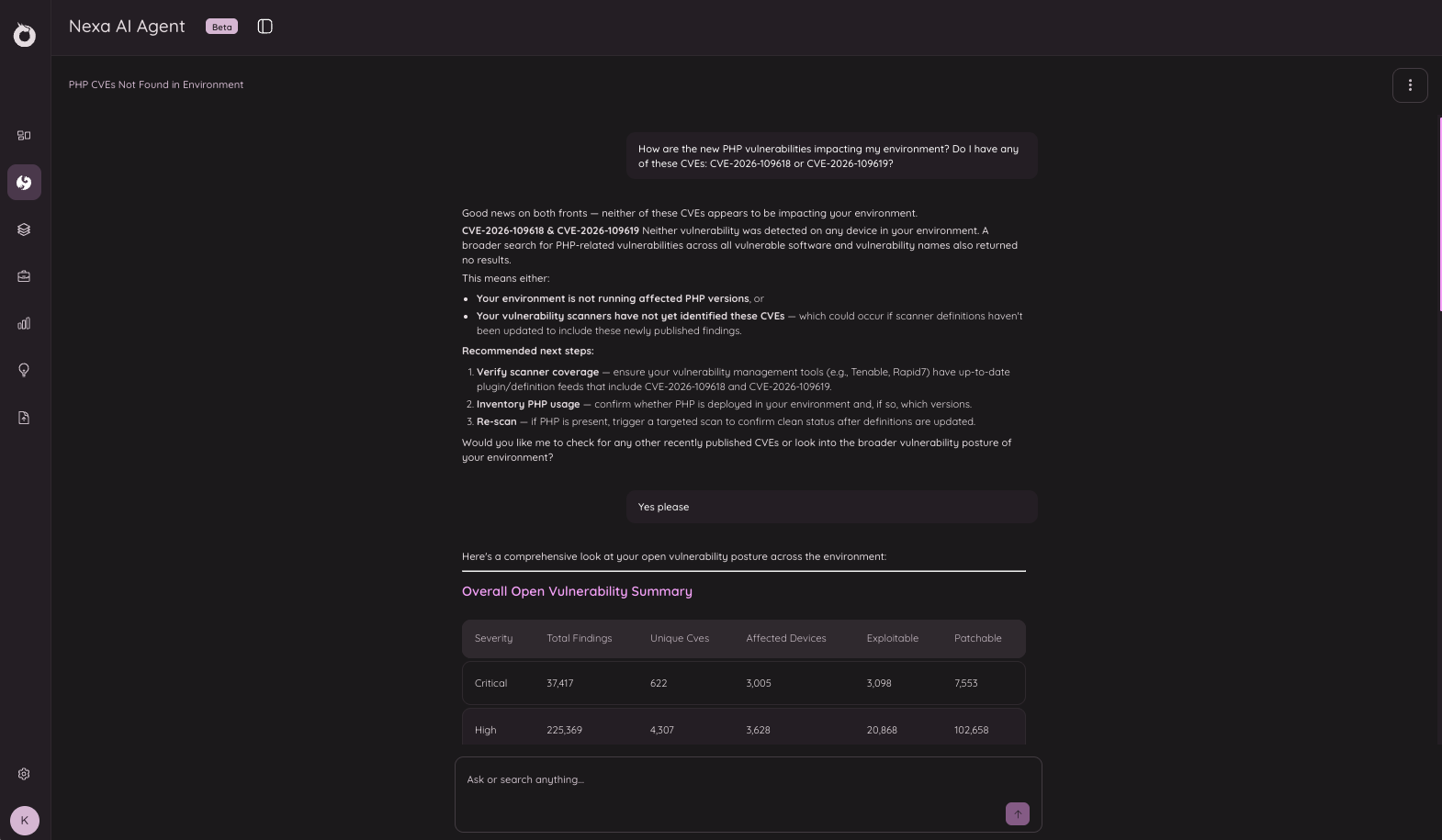
Instead of sifting through disparate scanner feeds or running lengthy manual audits, you can directly query Nexa, Onyxia’s virtual AI agent:
"Do I have any of these CVEs: CVE-2026-109618 or CVE-2026-109619?"
Nexa synthesizes asset data across your active security stack to immediately deliver a rapid, comprehensive exposure report detailing which assets are affected, their criticality, and their current patching status.
2. Measuring Vulnerability Management in Real Time with Key Cyber KPIs
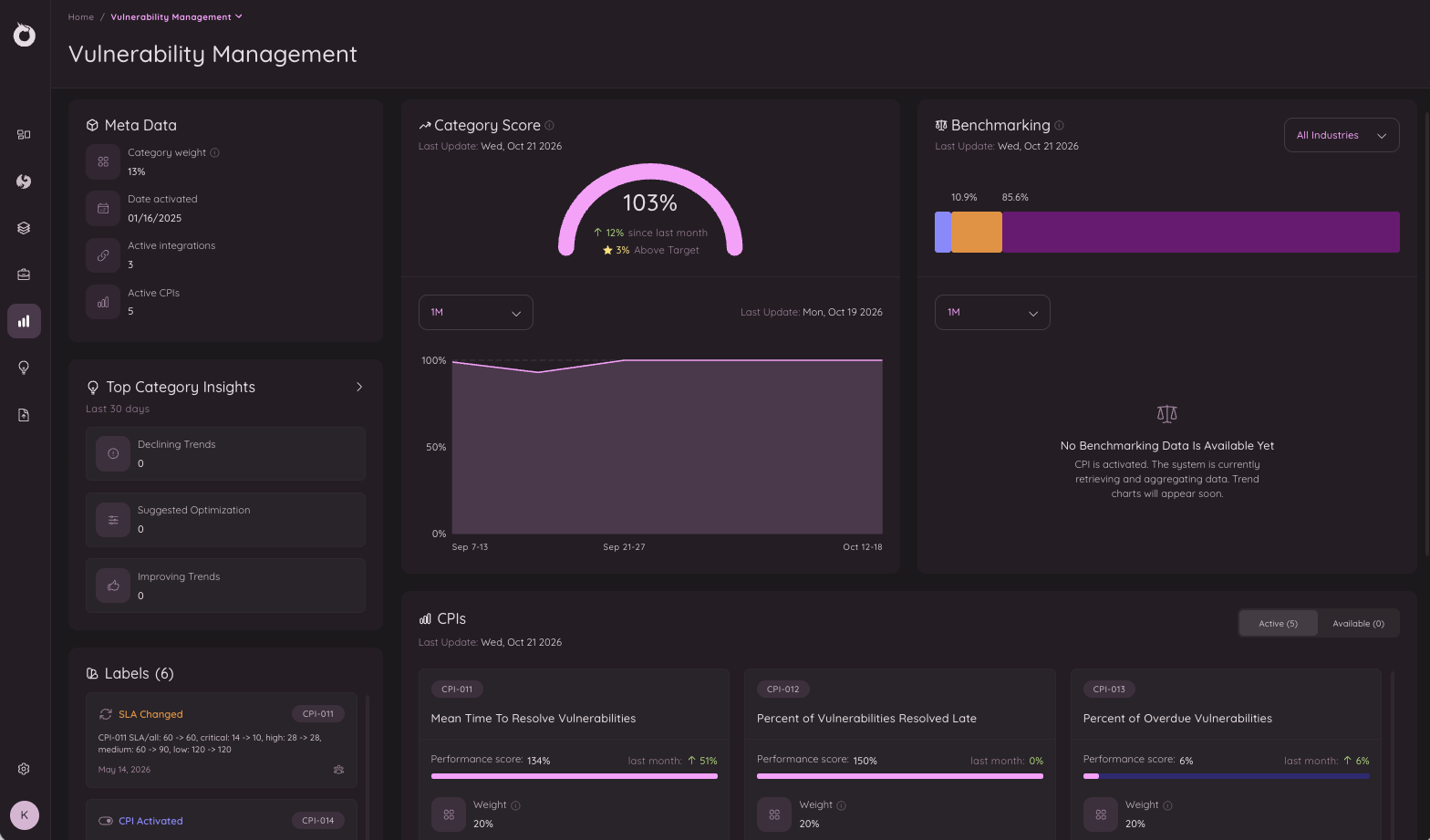
Onyxia continually tracks essential Cyber KPIs within your Vulnerability Management dashboard, translating raw alert volume into clear operational intelligence:
Percent of Open Vulnerabilities with Exploits
Measures unresolved vulnerabilities with known active exploits. For critical exposures like the recent PHP flaws, this metric flags affected assets instantly so teams prioritize active threat vectors.
Percent of Overdue Vulnerabilities
Tracks open vulnerabilities exceeding designated Time-to-Resolve deadlines. Keeps teams accountable for adhering to SLA targets during high-risk disclosures.
Percent of Vulnerabilities Resolved Late
Measures historical resolution trends past SLA deadlines, helping leadership identify process bottlenecks in patching workflows.
Mean Time To Resolve (MTTR) Vulnerabilities & Issues
Tracks daily remediation speed. These metrics confirm whether emergency patching protocols for zero-day threats are executing efficiently.
Mean Age of Open Vulnerabilities
Measures the average age of unresolved issues, identifying legacy exposure pockets across production and staging environments.
Action Plan for Security Leaders
Verify Exposure: Ask Nexa to audit your environment for CVE-2026-109618 and CVE-2026-109619.
Prioritize High-Risk Assets: Use CPI-014 to filter assets where active exploitation is detected or likely.
Apply Recommended Patches: Follow vendor and NSA guidance to update affected PHP instances immediately.
Monitor Remediation Velocity: Track CPI-011 and CPI-013 on your Onyxia dashboard to ensure team SLAs align with the urgency of active exploits.
Move From Exposure Overload to Autonomous Control
When critical vulnerabilities strike, manual data collection and disconnected tools leave your organization exposed. Onyxia provides the trusted foundation required to automate security program management and respond at machine speed. Book a demo today to see how our Agentic Cyber Governance Platform can continuously govern your security posture, optimize your exposure mitigation, and turn daily governance into long-term organizational resilience.