Cyber Resilience
Redefining cyber resilience for an AI-driven world
What is Cybersecurity Resilience?
Cyber resilience is an organization’s ability to anticipate, withstand, recover from, and adapt to adverse cyber events while maintaining continuous business operations. Unlike traditional cybersecurity, which focuses on preventing attacks, cyber resilience assumes disruptions will occur and prepares organizations to sustain operations without losing momentum. It encompasses the full security lifecycle: before, during, and after an incident.
Cyber resilience has become a foundational requirement rather than an advanced capability. As threats grow more sophisticated and regulations like the SEC’s cybersecurity disclosure rules and NIS2 raise the bar for incident response accountability, prevention alone is no longer sufficient. Effective cyber resilience requires continuous monitoring, proactive risk management, and the organizational agility to adapt as the threat landscape evolves, moving from reactive security toward preemptive exposure management.
Emergence of AI in Cyber Resilience
Artificial intelligence has completely changed what cyber resilience looks like. AI enables security teams to move beyond reactive threat response toward continuous, data-driven anticipation of risk. By analyzing patterns across large volumes of security data, AI can surface emerging exposures, prioritize remediation efforts, and forecast program performance up to 30 days ahead: allowing organizations to act before incidents occur rather than after.
For security leaders managing complex, multi-tool environments, AI transforms cyber resilience from a framework into an operational, measurable capability—one that continuously improves as the organization’s data matures. This shift from reactive to proactive to preemptive is what separates mature security programs from those still relying on incident response alone.
The 5 Stages of Building a Cyber Resilient Program
Building operational cyber resilience requires a structured approach, from establishing foundational visibility to enabling continuous, AI-driven improvement:
Asset Visibility: Establish a comprehensive, continuously updated inventory of all digital assets, identities, and tools across the environment. Cyber resilience begins with knowing what needs to be protected.
Exposure Assessment: Evaluate vulnerabilities, coverage gaps, and compliance risks across the organization’s infrastructure. Prioritization should reflect business impact, not technical severity alone.
Governance and Accountability: Define ownership, establish policies aligned with recognized frameworks such as NIST CSF and ISO 27001, and ensure cross-functional coordination across security, IT, legal, and executive leadership.
Automated Measurement and Reporting: Replace manual data collection with continuous monitoring that provides real-time visibility into program performance. Clear, business-aligned metrics enable leaders to demonstrate cyber resilience to boards and regulators.
Continuous Improvement: Treat every incident and near-miss as a feedback mechanism. Regular program assessments and industry benchmarking allow organizations to refine their posture as threats evolve.
Cyber Resilience vs. Cybersecurity
Cyber resilience and cybersecurity are related but represent different scopes of organizational preparedness. Cybersecurity focuses on defending systems, networks, and data from attack. Its success is measured by incidents prevented and threats blocked. Cyber resilience encompasses cybersecurity while extending it to address continuity, recovery, and adaptation when prevention is not enough.
A cybersecurity program asks how to stop breaches. A cyber resilience program asks how the organization continues to function when a breach occurs. Governance defines the what and why, while cyber resilience ensures the organization can sustain operations regardless of outcome.
The Importance of Cyber Resilience
Cyber resilience is important because it elevates security from an IT function to a business priority. Organizations that invest in resilience are better positioned to meet regulatory obligations, maintain stakeholder trust, and reduce the financial and reputational impact of incidents. As frameworks like the SEC’s cybersecurity disclosure rules and NIS2 place greater accountability on security leaders, cyber resilience becomes the governance structure and documented evidence needed to demonstrate compliance.
Beyond regulatory drivers, a resilient (and preemptive) security program signals organizational maturity to customers, partners, boards, and regulators alike.
The Challenges of Cybersecurity Resilience
Building genuine cyber resilience is a big operational undertaking. Many organizations struggle with fragmented security tool ecosystems that produce data without actionable context, making it difficult to maintain a coherent view of risk across the enterprise. Shifting from reactive to proactive (and ultimately preemptive) security requires both technology investment and organizational change, which is often hard for teams built around incident response workflows.
Communicating cyber resilience in business terms—cost avoidance, regulatory standing, risk reduction—remains a challenge for security leaders whose metrics are typically technical rather than financial. The rapid pace of change across cloud environments, AI adoption, and third-party dependencies further complicates efforts to maintain current, relevant policies and controls.
Onyxia for Cyber Resilience
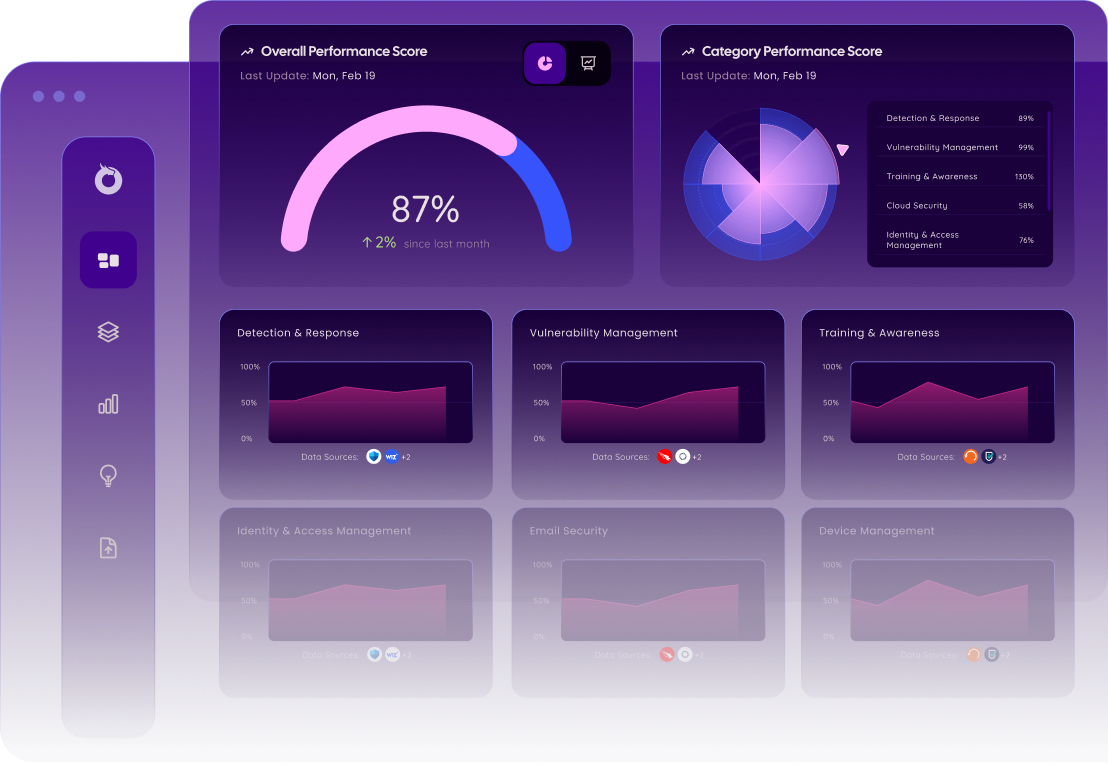
Onyxia's Preemptive Cyber Resilience Platform delivers the operational capability organizations need to make cyber resilience measurable. By connecting the existing security stack through 40+ integrations and synthesizing data through Nexa, Onyxia’s AI Security Agent, organizations gain continuous visibility into exposures, coverage gaps, and program performance in real time.
Automated assessments replace manual reporting cycles, board-ready reporting translates technical risk into business outcomes, and AI-driven prioritization ensures that remediation efforts focus where they have the greatest impact. Whether managing compliance with SEC disclosure requirements or advancing toward Continuous Threat Exposure Management (CTEM), Onyxia provides the intelligence and operational structure to move from reactive to resilient, for good.

Manage Your Cyber Resilience in a Data-Driven Way
From Visibility to Actionability
Turn the data and Al-driven insights you receive today into a stronger security strategy for tomorrow.